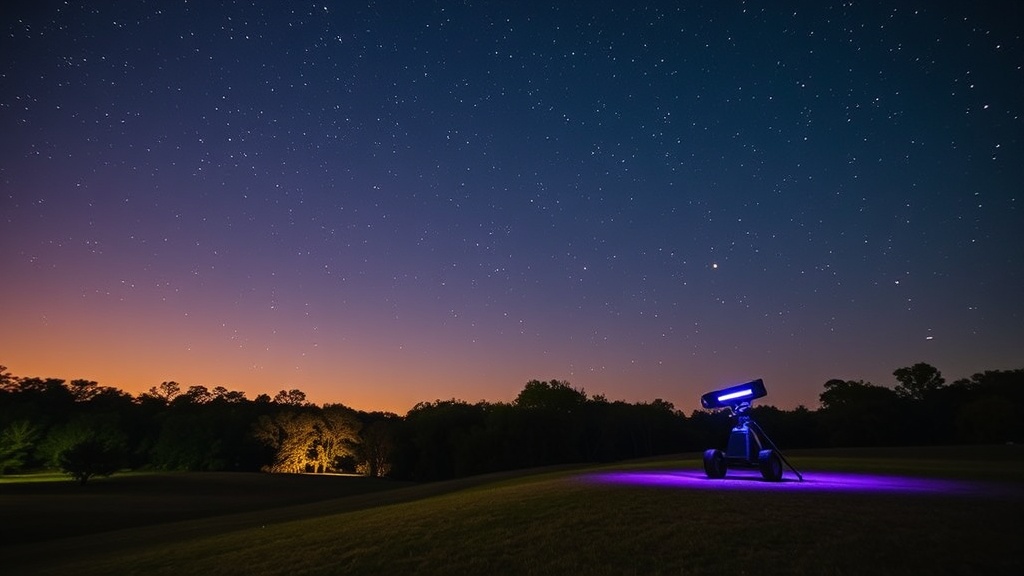
Finding the Best Spots for Stargazing Near the Park

A group of campers sits around a dying fire near Lake Opeongo, looking up only to see a faint, hazy glow rather than the crisp Milky Way they expected. They realized too late that a nearby bright town or a poorly shielded campsite was washing out the view. This post identifies the best locations, timing, and gear for stargazing in the Algonquin Park region to ensure you actually see what's above you.
Algonquin Park is one of the best places in Ontario for astronomical viewing because it sits well away from the heavy light pollution found in the GTA or Ottawa. However, seeing the stars isn't just about being in the park—it's about knowing exactly where to stand and when the sky will actually cooperate. If you pick the wrong spot, you might spend your whole trip staring at a dark, empty void instead of the celestial wonders we're lucky to have here.
Where are the best spots for stargazing near Algonquin Park?
The best spots for stargazing near the park are the high-elevation points and the remote interior campsites far from any developed roads or bright facilities. Most people head to the northern reaches of the park or the high ridges near the Madawaska River valley to escape the ambient light from the park gates and staff campgrounds.
If you aren't planning on hiking deep into the backcountry, look for areas near the 60 Division or the higher points along the West Gate. These locations offer a slightly better vantage point. A solid tip is to find a clearing that isn't blocked by dense canopy; even a small break in the trees makes a massive difference for your field of view. (I've spent enough nights in the bush to know that a single tall pine can ruin a perfectly good view of the Orion Nebula.)
For those who prefer to stay closer to the road, the lookout points along the highway-accessible trails are decent, but you'll still see some light bleed from the nearby campgrounds. If you want true darkness, you'll need to head toward the interior. This is where the real magic happens. If you're planning to trek out there, make sure you pack a lightweight backpack for your hike so you aren't struggling with heavy gear while trying to look up.
Here are a few specific types of locations to look for:
- High Ridges: Elevation helps you get above the low-lying mist and certain ground-level light pollution.
- Interior Lakes: Being in the middle of a lake provides a 360-degree unobstructed view of the horizon.
- Backcountry Campsites: These are the gold standard because they are naturally shielded by distance from any human activity.
What gear do I need for stargazing in Ontario?
You need high-quality red-light headlamps, comfortable seating, and weather-appropriate layers to enjoy a successful night under the stars. Using a standard white flashlight is a rookie mistake—it will ruin your night vision for up to 30 minutes. Instead, use a red light to preserve your eyes' ability to see faint objects in the sky.
I highly recommend the Black Diamond Storm headlamp or something similar that has a dedicated red light mode. It's a small investment that pays off immediately. You also don't want to be standing up all night. A lightweight, foldable camp chair—like a Helinox Chair One—is much better than sitting on a cold rock or a damp log. It lets you lean back and truly soak in the view without your legs falling asleep.
Don't forget the temperature factor. Even in the summer, the temperature in the park can drop significantly once the sun goes down. I've seen people shivering in light hoodies while trying to watch a meteor shower, and it's not a good look. Bring a heavy fleece or a down jacket. If you're out on the water, remember to prepare your canoe for a smooth paddle and perhaps even use it as a stable platform for viewing from a calm cove.
| Item | Why It's Needed | Pro Tip |
|---|---|---|
| Red Light Headlamp | Preserves night vision | Check batteries before leaving home |
| Compact Camp Chair | Comfort and stability | Bring one with a high back |
| Thermal Layers | Prevents heat loss | Merino wool is your best friend |
| Binoculars | Magnifies celestial objects | A 7x50 pair is perfect for beginners |
How can I tell if the sky will be clear?
You can tell if the sky will be clear by checking specialized astronomical weather forecasts and monitoring local cloud cover data. Standard weather apps are often too vague for serious stargazers; they might say "partly cloudy," but they won't tell you if the atmosphere is actually transparent or if there's heavy moisture in the air.
The most reliable way to check is to use a site like Clearer Sky or even the Wikipedia page for astronomical seeing to understand the terminology. You want to look for "seeing" and "transparency." High transparency means the air is clear of dust and moisture, while good "seeing" means the atmosphere is stable and not turbulent. If the stars are twinkling wildly, the atmosphere is turbulent, and your view through a telescope will be blurry.
The moon is also a huge factor. If you want to see the Milky Way, you need a New Moon. A Full Moon is beautiful, but it's actually the enemy of stargazing because it creates so much light that it drowns out the fainter stars. Check a lunar calendar before you head out. If the moon is bright, you'll see the big constellations, but you won't see the deep-space details.
Another thing to watch for is the "Bortle Scale." This is a method used to measure the darkness of the night sky. Algonquin Park is deep into the low Bortle zones (Bortle 2 or 3), which is why the stars look so much brighter here than they do in a suburb. If you're looking at a map, aim for the areas with the lowest numbers.
One thing to keep in mind is the humidity. In Ontario, we often deal with high humidity in the summer. Even if the sky looks clear, a high dew point can cause moisture to condense on your camera lenses or binoculars. If you're using expensive gear, keep it in a sealed bag until the moment you need it. It's a small detail, but it saves a lot of frustration.
When you're out there, remember to be respectful of other campers. If you're using a light to move around, keep it low and directed at the ground. Sudden bright lights can be a real nuisance to people trying to enjoy the quiet of the woods. It's a shared experience, after all.
If you're looking for a quick snack while watching the stars, avoid anything that requires heavy cooking or creates a lot of light. A simple thermos of tea or coffee is much more practical. Speaking of coffee, if you're heading out early to catch the sunrise after a night of stargazing, you might want to check out the best local coffee stops near the park entrance on your way back into town.
The beauty of the Algonquin area is that the sky is truly a part of the landscape. It's not just something above us; it's an integral part of the wilderness experience. Whether you're a seasoned amateur astronomer or someone who just wants to see a shooting star, the effort to find a dark spot is always worth it.